
HDFC Floater Credit Cards: What Are They and How Can You Get One? (Expanded Guide)
HDFC floater (add-on) credit cards share your primary card's limit—letting you add specialized co-branded cards with faster approvals and often minimal docs. Here's a practical, experience-led guide for February 2026.
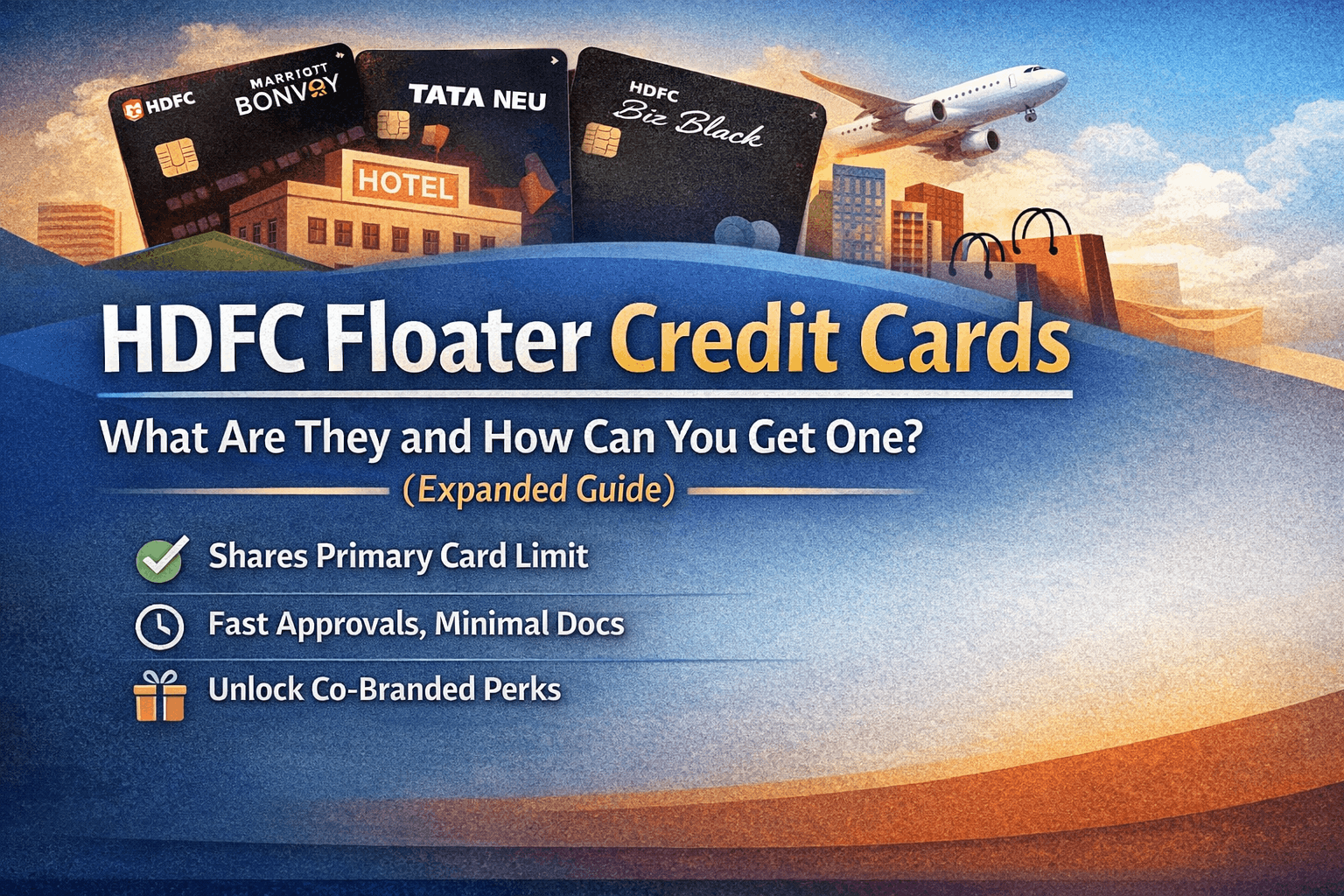
In India’s competitive credit card scene, HDFC Bank’s Floater cards stand out as a clever, underutilized strategy. These allow experienced cardholders to add specialized cards that share the primary card’s credit limit—unlocking premium perks without the usual income proofs, ITR submissions, or lengthy approvals.
I discovered this approach after years of managing my HDFC Regalia card. What started as a modest card became the foundation for a diverse portfolio featuring Marriott Bonvoy, Tata Neu RuPay, and even the elusive Biz Black. If you have a well-maintained HDFC primary card with a decent limit (ideally ₹5 lakhs or more), Floater cards can dramatically boost your rewards, travel status, and everyday value. Here’s everything you need to know, based on real experience.
Understanding HDFC Floater Credit Cards
A Floater Credit Card (officially called an add-on or supplementary card by HDFC) is a secondary card issued on your existing primary credit card account. Unlike a standalone card, it doesn’t create a new credit line. Instead, it shares the primary card’s credit limit entirely. Spends from the main card and all floaters are pooled together, and the available limit updates in real time across all cards.
This setup is ideal for families (giving a card to a spouse or child) or for individuals who want multiple specialized cards without multiplying limits or credit inquiries. HDFC typically allows up to 3 Floater cards per primary card, though this can vary by profile and card type.
The biggest differentiator from regular add-on cards is flexibility. When your primary card has a strong track record—high limit, low utilization, and consistent autopay—HDFC often issues floaters with minimal documentation. No separate salary slips or ITRs are usually needed for the add-on applicant.
Key benefits include:
- Faster approval (sometimes instant or within days).
- No impact on your CIBIL score from new applications (often reduced vs a fresh unsecured application).
- Access to co-branded cards with niche rewards (travel, UPI, business).
- Consolidated tracking (shared limit; statements/rewards vary by card/program).
However, the shared limit means discipline is crucial—one high spend on any card affects everyone.
My Personal Journey: Building from Regalia
I began with an HDFC Regalia card several years ago. At first, the limit was modest—barely enough for monthly expenses. Instead of chasing upgrades aggressively, I focused on consistency. I enabled autopay of just ₹200 to ensure the card never lapsed due to forgetfulness. I used it responsibly for groceries, fuel, and utilities, always keeping utilization below 30%. Over time, HDFC noticed the healthy relationship and gradually enhanced my limit. Today, it comfortably sits above ₹5 lakhs.
This wasn’t overnight. It took patience and smart habits: paying bills early, using HDFC’s SmartBuy portal for extra rewards, and maintaining other banking products with them. That solid primary card became leverage for premium floaters.
Cracking the Biz Black Code Through Floaters
The HDFC Biz Black Metal Edition is widely regarded as one of the hardest cards to obtain directly. It targets business owners with high ITR, plus strong banking relationships. After multiple rejections over 8 months, I decided to try the Floater route.
I approached my Relationship Manager and requested Biz Black as an add-on to my Regalia (with its 5L+ limit). The approval came through relatively smoothly because the primary card’s limit and history satisfied internal criteria. No fresh ITR was demanded for the floater.
The card arrived with premium features such as accelerated reward points on business spends, airport lounge access for primary and add-on holders, golf benefits, Taj-style vouchers, and up to ~55 days of interest-free credit (exact benefits and terms vary by variant and bank policy).
I’ve since helped friends replicate this. Several with similar Regalia or other mid-tier HDFC cards succeeded using the same method.
Important 2026 update: Recent reports indicate HDFC has discontinued issuing Biz Black on floater limits. Policies evolve quickly—always verify with your RM or branch before applying.
My Optimized Floater Portfolio
Here’s how my current setup (1 primary + 3 floaters) works in practice:
1) HDFC Marriott Bonvoy Credit Card (Floater)
Targeted purely for Marriott loyalty. Upon issuance (or after a small spend/fee), I received complimentary Silver Elite Status, 10 Elite Night Credits, and a Free Night Award redeemable at eligible properties (terms apply). Those 10 credits can be game-changing—they count toward higher tiers like Gold or Platinum, helping unlock benefits faster during travels.
I use this card primarily for hotel and dining spends to maximize points earning (earn rates and categories depend on the card’s current program terms).
2) HDFC Tata Neu Credit Card (RuPay variant) (Floater)
My go-to for daily transactions. The RuPay version shines because it links to UPI apps, letting you pay via credit card on PhonePe, Google Pay, or BHIM (availability depends on app/bank support). Rewards can be very strong inside the Tata ecosystem via NeuCoins, with straightforward redemption where 1 NeuCoin typically equals ₹1 (subject to program rules).
This card handles most of my UPI, groceries, and online shopping, turning routine spends into meaningful savings.
3) HDFC Biz Black (Floater)
The crown jewel for high-value business and milestone spends. Beyond rewards, it can deliver lifestyle perks like concierge, dining programs, and business-focused add-ons. I route large or business expenses here to maximize accelerated points and milestone vouchers (where applicable).
All cards share one limit, so I monitor utilization weekly via the HDFC app to avoid surprises.
Step-by-Step: How to Get Your HDFC Floater Cards
- Strengthen your primary card: request limit enhancement every ~6 months, keep autopay enabled, and maintain low utilization. Building a broader HDFC relationship (accounts/investments) can help.
- Engage your RM: schedule a call/branch visit and clearly state you want floater/add-on cards for specific benefits (e.g., Marriott, Tata Neu, business).
- Submit minimal docs: often basic KYC for the add-on holder is sufficient if the primary profile is strong (bank discretion applies).
- Apply strategically: use NetBanking, the HDFC app, or the official card portal. Some co-branded cards have dedicated flows that can support add-on issuance.
- Follow up: approvals can take ~7–30 days. Follow up politely with your RM if stuck.
Common mistakes to avoid: applying when utilization is high, requesting too many cards at once, or having no meaningful HDFC relationship.
Best Practices and Risk Management
- Utilization discipline: Treat the entire pool as one limit. I aim to keep total utilization under ~20–25%.
- Reward optimization: Assign spends by use-case (travel/hotels to Marriott, UPI/Tata to Neu, big-ticket business spends to Biz Black).
- Regular reviews: Check statements, offers, and program updates monthly. Banks frequently run targeted campaigns for existing customers.
Risks: shared limit means one person’s overspending affects all. Late payments impact the primary cardholder’s credit score. If possible, set sub-limits for add-on users and keep autopay for at least the minimum due (preferably total due).
Frequently Asked Questions
Q: How many floaters are allowed?
A: Usually 3, sometimes more on premium primaries (profile and policy dependent).
Q: Do floaters affect CIBIL?
A: Typically minimal compared to opening multiple new credit lines, since floaters are generally tied to the same underlying account/limit. Reporting can vary—monitor your credit report.
Q: Can I close a floater easily?
A: Often yes, via RM or customer care/app, without closing the primary card (process varies).
Q: Is Biz Black still possible as floater?
A: It was highly effective until early 2026 changes; current issuance policies can change quickly. Confirm with HDFC before relying on this route.
Q: Are there annual fees on floaters?
A: Depending on the card, fees may apply, be waived for add-ons, or be spend-waivable. Always confirm the latest fee/waiver terms.
Final Thoughts
HDFC Floater cards transformed my credit card setup from basic to highly rewarding. A strong Regalia foundation, combined with targeted floaters, can deliver Marriott status acceleration, easy UPI rewards via Tata Neu, and premium benefits from business-focused cards—all managed under one shared limit. The key is patience in building the primary card and strategic selection of add-ons.
If you already bank with HDFC and have a well-maintained card, start exploring floaters today. Speak to your RM and see what’s possible for your profile. Results vary by relationship strength, so consistent habits pay off.
What’s your experience with HDFC cards or floaters? Share in the comments—I’d love to hear success stories or questions!
Disclaimer (Feb 2026): This is based on personal experience and community insights. Credit card terms, eligibility, reward structures, and bank policies change frequently. Always cross-check on HDFC Bank’s official website or consult your Relationship Manager before applying. Responsible credit usage is essential.